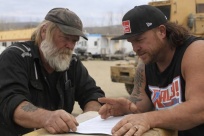
But when a multi-millionaire Klondike legend looks into the exact same hole, he doesn't see a failure. He sees an economic equation—and a massive, untapped opportunity.
The latest Gold Rush development initially looked like a story of a young miner getting in too deep. Operating with limited capital and a skeleton crew, Rick Ness had pushed his team to their breaking point. But once an experienced rival began to analyze the raw geology of the cut, the real story became a brutal lesson in mining economics.
For weeks, Rick Ness and his small, seven-person crew had been fighting a losing battle at the Valhalla cut on Duncan Creek. The goal was to reach a massive, gold-rich ancient riverbed. But after digging 150 feet down, they hit a 25-foot layer of barren, impenetrable clay. The operation stalled, fuel costs mounted, and Rick openly questioned his future in the Yukon.
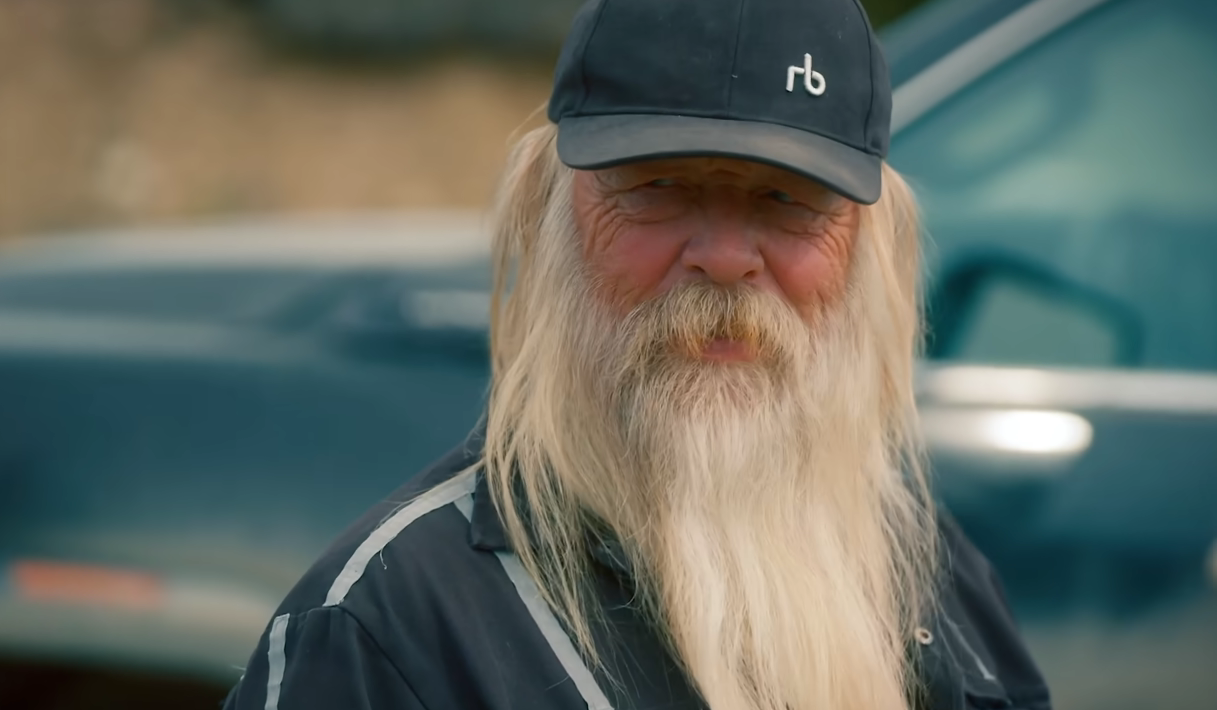
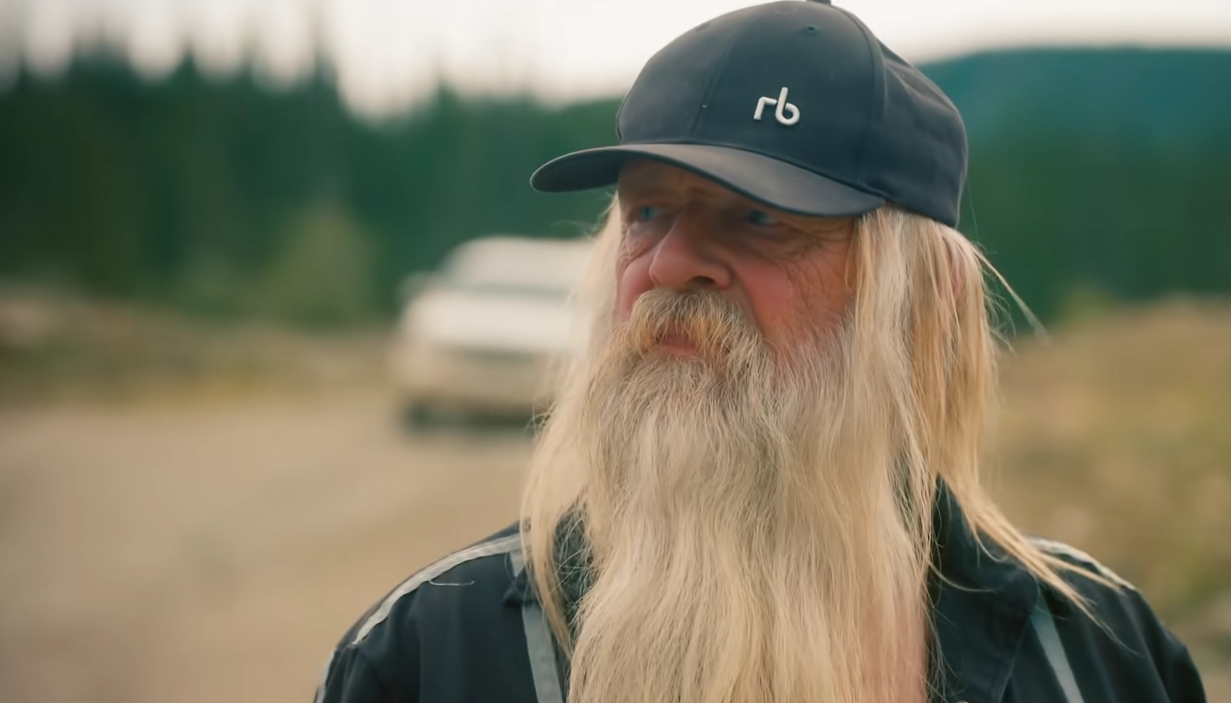
Just as the psychological weight of the massive, empty pit threatened to crush the operation, Tony Beets arrived on the claim.
Tony is a veteran mine boss who operates on a scale that dwarfs the Ness operation. While Rick was struggling to keep a handful of machines running, Tony casually mentioned that he currently owned 30 rock trucks and was actively looking to buy more. When Rick admitted that the extreme depths they were chasing at Valhalla were getting "a little out of hand" for his small crew, Tony didn't offer sympathy. Instead, he demanded to see the problem firsthand.
Climbing into Rick’s beat-up camp vehicle—a truck Rick casually noted had absolutely no brakes—the two mine bosses took a dangerous ride to the edge of the deepest dig on Duncan Creek.
When Tony stepped up to the edge of the massive excavation, his initial reaction validated the sheer scale of Rick's struggle. "Holy [__], that's a hell of a hole, pal," Tony remarked, staring down the steep, tiered walls of the Valhalla cut. But Tony wasn't there to admire the dirt; he was there to calculate the margins.

He immediately began interrogating Rick on the geological data. He asked to see the bedrock, tracing the steep dive of the underground terrain. Then, he asked the most important question in deep placer mining: "How many feet is loose?"
Rick provided the numbers: 150 feet down to the target, with an estimated 50 feet of pay dirt waiting at the bottom.
For a layman, moving 150 feet of barren overburden just to reach the gold sounds like an impossible, foolhardy task. But for Tony Beets, those numbers triggered a rapid mental calculation. "Three to one," Tony confirmed. "Well, that's not all wrong with that."
In the mining industry, this is known as the "strip ratio"—the amount of waste material that must be moved to extract a specific amount of ore. A 3:1 strip ratio means moving three cubic yards of worthless dirt to reach one cubic yard of gold-bearing pay dirt. In the Klondike, a 3:1 ratio is actually highly profitable, provided the gold grade is strong enough and the operation has the sheer volume to process it efficiently.
But then Tony uncovered the fatal flaw in Rick’s master plan. He asked to see the core samples and drill holes that proved the 50 feet of pay dirt actually existed in that specific spot.
Rick was forced to admit the truth: there were no drill holes. He had based the entire multi-million dollar excavation on a blind assumption, hoping the gold channel from the nearby Vegas Valley simply continued in a straight line under Valhalla.
The misdirection was brilliant. The problem at Duncan Creek wasn't necessarily that the ground was completely dead, or that a 150-foot dig was physically impossible. The real crisis was one of scale and capital.
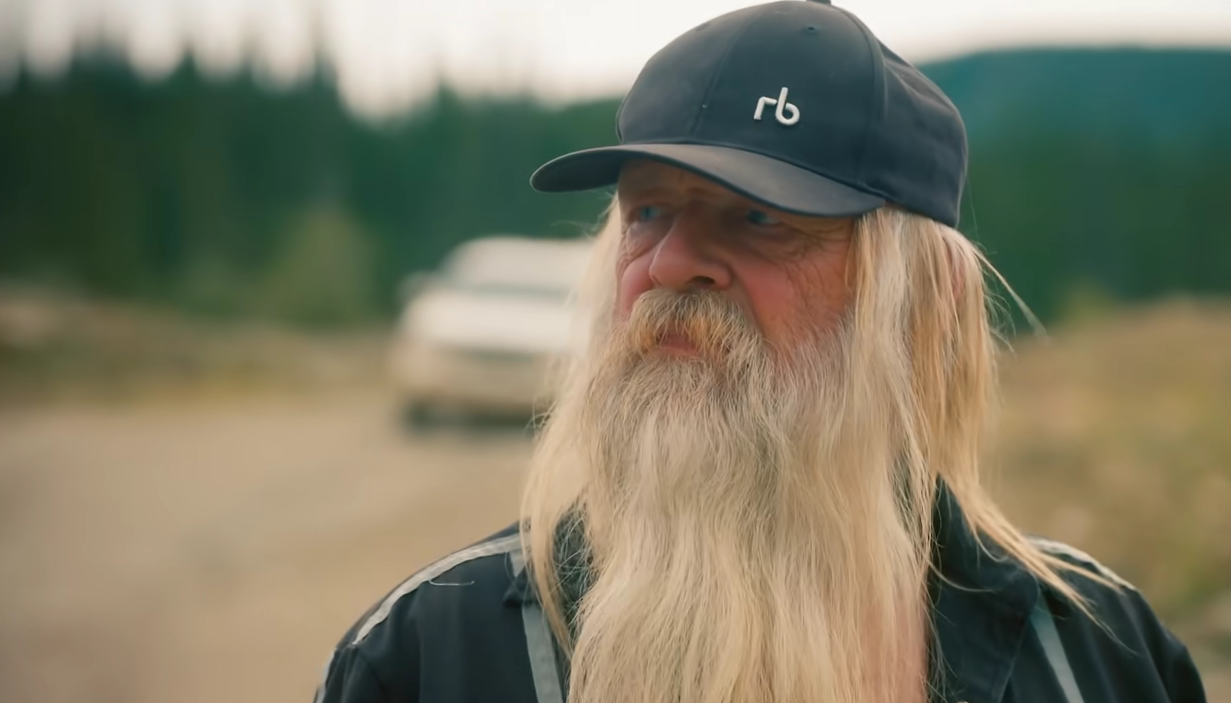
Standing on the edge of the massive pit, Tony laid out the harsh reality of deep-earth placer mining. To successfully execute a 3:1 strip ratio at that extreme depth, you cannot rely on a seven-person crew and a few old machines.
"If you attack something like this... 10, 15 trucks, if not 20, go like hell to really open it up," Tony explained. To make the math work, you need a massive, unyielding fleet of heavy equipment running non-stop to strip the overburden and expose the pay streak. It requires millions of dollars in upfront capital, staggering fuel costs, and a small army of operators.
For Rick Ness, the truth was devastating. He was sitting on a massive, highly engineered cut that possessed a profitable geological ratio. The gold was likely there, buried beneath the clay. But he simply lacked the financial firepower to retrieve it.
"I can't afford that," Rick quietly admitted.
The current development leaves Rick in a paralyzing financial trap. He has proven he has the ambition to engineer a massive Klondike mega-cut, but he does not have the bankroll to see it through. With Tony Beets—a man who owns 30 rock trucks and millions in capital—standing directly next to him, the stage is set for a massive Klondike power play. The next documented step will determine whether Rick Ness finds a miracle way to fund his fleet, or if he is forced to hand his masterpiece over to a rival who can actually afford to mine it.
THEO DÕI CHÚNG TÔI TRÊN FACEBOOK