
Ancient wood fragments, recovered from far beneath waterlogged ground, have renewed doubts about what lies below the Money Pit.
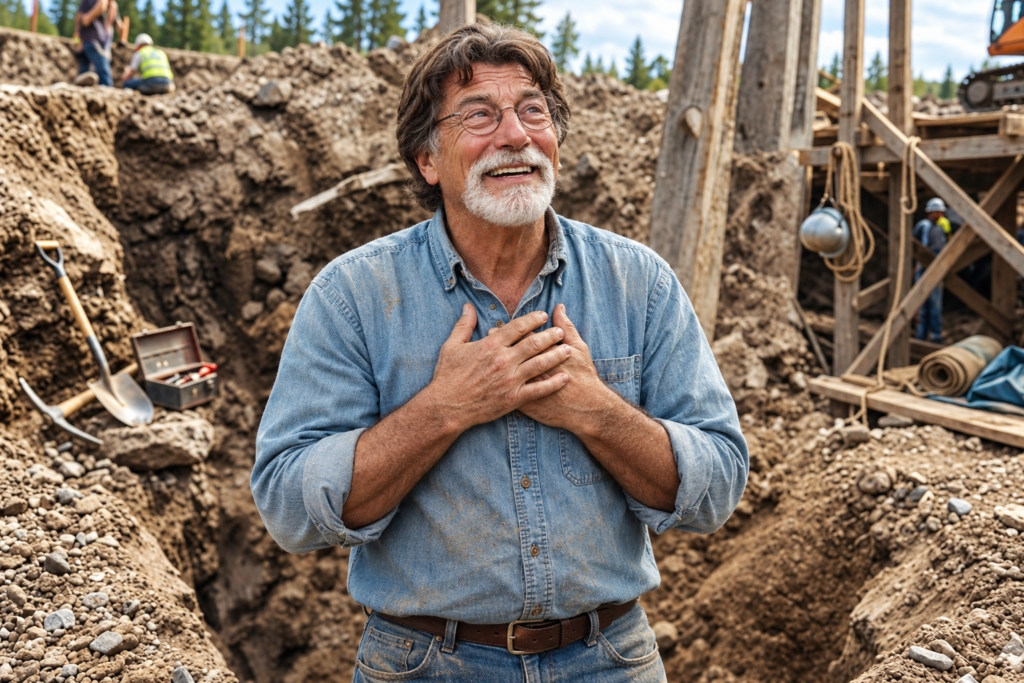
Historian Corjan Mol brings a new perspective to the mystery, while advanced scanning technology offers the team another way to investigate what remains hidden.
Could these overlooked pieces of timber finally point toward the secret that has eluded treasure hunters for more than two centuries?
WOOD WHERE IT SHOULDN’T BE — THE DISCOVERY THAT GAVE RICK LAGINA PAUSE
Oak Island has produced coins, metal fragments, unusual structures, and countless clues that have kept its legendary treasure hunt alive.
Yet sometimes, the smallest discovery creates the biggest question.
This time, the object demanding attention is not a glittering coin or an ornate relic.
It is a collection of ancient-looking wood fragments recovered from deep underground during drilling operations.
At first glance, timber might seem like an ordinary find.

Wood can survive underground under certain conditions, especially when the surrounding environment limits its exposure to oxygen.
But its significance changes when investigators encounter it at an unexpected depth, in a location where its position and apparent shaping call for a closer explanation.
Why was the timber there?
How did it reach that depth?
And could its condition reveal whether someone deliberately placed it underground?
Those are the questions that make this discovery so compelling.
In the scenario surrounding Season 14, the recovered fragments are described as intentionally shaped and cut, prompting renewed speculation that they could be associated with earlier human activity.
If the physical evidence supports that interpretation, the wood could become more than another curious object in the island’s growing collection.
It could offer a clue about how people may have worked beneath the surface long before modern excavation began.
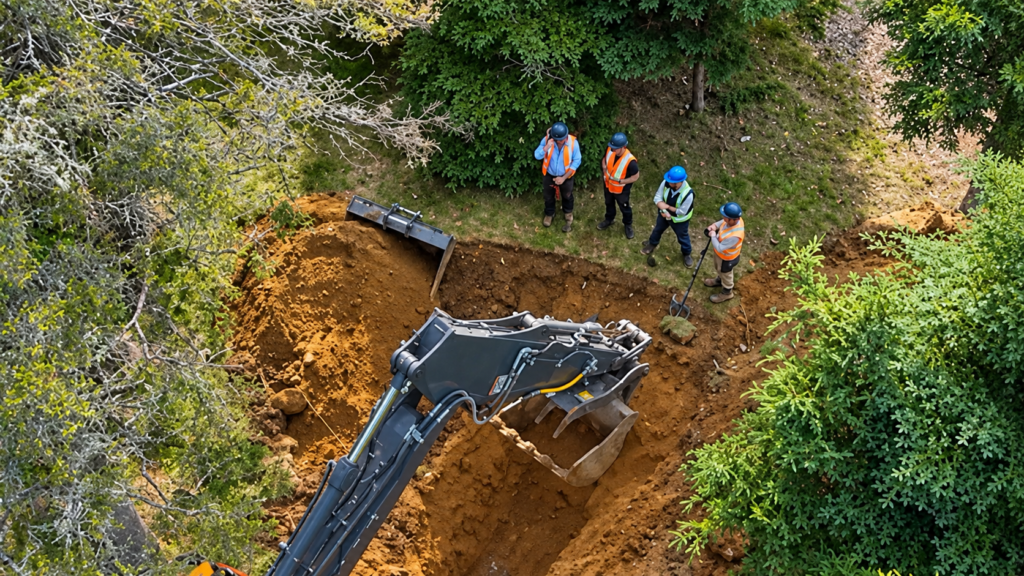
For Rick Lagina, that possibility would be difficult to dismiss.
Years of searching have taught him that an object’s importance cannot always be judged by its appearance.
A piece of timber may reveal more through its location, condition, and relationship to surrounding materials than through anything visible on its surface.
If the wood came from a constructed shaft, support system, platform, or other buried feature, it could help investigators reconstruct an activity that otherwise left little evidence behind.
But there is a critical distinction between an unusual discovery and a confirmed breakthrough.
Wood can occur naturally underground, and fragments may also have been moved by earlier excavation, deposited during previous operations, or introduced through other processes.
To establish a deliberate human origin, researchers would need to examine the pieces closely, identify credible evidence of working or shaping, and study the geological context in which they were recovered.
Dating would be equally important.
If reliable testing established when the timber grew or was used, researchers could compare that information with the known history of the Money Pit and earlier activity on the island.
Even then, the age of the wood would not necessarily establish the date when it was placed underground.
That is what makes the find so intriguing: it creates several possible explanations, each demanding a different kind of investigation.
If the fragments are associated with an old man-made structure, the next question becomes obvious.
What was that structure intended to do?
Could the wood have supported a shaft or passage?
Was it part of an earlier excavation?
Or does it belong to a different stage of Oak Island’s history that researchers have not yet fully understood?
No single fragment can answer all those questions.
But together with other evidence, the timber could help the team identify a much clearer direction for its next investigation.
And this is where historical research enters the story.
Because if the wood really does preserve evidence of deliberate activity, investigators will need more than machinery to understand it.
They will need to determine what the physical clues can reveal about the people who may have placed them there.
CORJAN MOL ENTERS THE MYSTERY — COULD THE TIMBER REWRITE THE STORY BENEATH THE MONEY PIT?
The appearance of ancient wood is one thing.
Establishing what it means is another.
This is where historian and historical researcher Corjan Mol becomes a particularly interesting part of the investigation.
Associated with the Oak Island team since 2019, Mol has contributed a historical perspective to questions involving early exploration, European connections, and the many competing explanations surrounding the island.
His role is especially relevant when physical evidence invites a larger historical question.
A timber fragment cannot identify its maker simply because it appears old.
Nor can an unusual shape establish a connection to a particular expedition, country, or historical organization.
The challenge is to determine whether the material can be placed within a credible context—and whether that context supports one explanation more strongly than the alternatives.
Imagine the possibilities if the recovered wood shows convincing signs of being worked by human hands.
Researchers could compare its characteristics with those expected from historical construction practices.
The timber’s physical condition, tool marks, and any associated materials might help reveal whether it was used for structural support or served another purpose.
If it can be dated reliably, that information could help narrow the period in which the wood was present or used.
Mol’s historical perspective could then help the team ask more focused questions.

What kinds of activity were taking place in the region during the relevant period?
Were there documented expeditions, settlements, mining operations, or maritime activities that might provide useful comparisons?
Could the timber fit an established historical explanation, or would the evidence require investigators to consider a less familiar possibility?
These questions are more productive than immediately assigning the wood to a famous group or legendary expedition.
Oak Island has inspired theories involving pirates, European explorers, religious orders, and secret deposits of treasure.
Some ideas are captivating, but a connection to any particular group must be demonstrated through evidence rather than resemblance or imagination alone.
The wood could eventually support a straightforward explanation.
It might be associated with an earlier search or a later construction project.
Alternatively, a combination of dating, material analysis, and surrounding archaeological evidence could reveal activity that deserves more detailed historical study.
Either outcome would matter.
Suppose the timber can be connected to a constructed feature at depth.
Investigators might then compare it with the locations of other underground anomalies to determine whether those features belong to the same system.
If the dates differ, that could suggest that the area experienced multiple phases of activity.
If the materials and chronology align, a more coherent explanation might begin to emerge.
That is the kind of incremental progress capable of changing an investigation.
For Rick, the priority would be understanding where the evidence leads.
For Mol, the challenge would be placing that evidence within a defensible historical framework.
The most valuable result would come when the physical findings and historical interpretation support one another without forcing the facts to fit a preferred theory.
And what if the wood ultimately points toward a much earlier period than the team initially expected?
Such a result would not automatically prove that the legendary treasure exists.
But it could reshape the questions researchers ask about who visited the island, what they did there, and how much of its buried history remains unexplained.
The timber may be small.
The historical questions surrounding it are not.
ADVANCED SCANNING REVEALS NEW POSSIBILITIES — IS THE FELLOWSHIP CLOSER THAN EVER?
The most frustrating aspect of Oak Island is that the ground rarely reveals its secrets all at once.
An object recovered from a deep borehole may tell investigators that something unusual exists, yet leave them uncertain about the surrounding structure.
A promising signal may indicate a subsurface anomaly without identifying its composition or purpose.
And a clue that seems isolated today may become more significant once researchers compare it with evidence from another location.
That is why advanced subsurface scanning could play an important role in the next stage of the investigation.
In the scenario described for Season 14, the Lagina brothers are equipped with advanced scanning technology intended to improve their understanding of what lies beneath the island.
The prospect is exciting because better subsurface imaging could help researchers examine underground features before deciding where more intrusive excavation is justified.
Rather than immediately digging through a large area, investigators can use suitable scanning methods to identify anomalies, study patterns, and refine potential targets.
The precise capabilities depend on the technique and the ground conditions, but such tools can help guide an investigation when interpreted alongside drilling results and physical samples.
The limitation is just as important as the promise.
A scan may reveal a change in density, a boundary, or an unusual feature.
It does not automatically identify a treasure chest, a tunnel, or a man-made chamber.
Investigators would need to compare the results with geological information and, where appropriate, confirm their interpretations through direct examination.
But imagine what could happen if a scanning result aligns with the location where unusual timber was recovered.
That would give the team a much more focused question to investigate.
Could the fragments be associated with a larger underground feature?
Is there evidence of a structure extending beyond the area already examined?
Or is the apparent pattern explained by natural geology rather than human construction?
The possibility of a connection is exciting, but it would need to be tested rather than assumed.
If the scan identifies a consistent anomaly and further investigation reveals materials that match the proposed interpretation, the team could gain a stronger understanding of the underground environment.
If the findings do not align, the researchers would need to revise their assumptions and explore alternative explanations.
Either outcome would advance the investigation.
It is this combination of technology, material evidence, and historical interpretation that could give Season 14 its most compelling investigative thread.
Rick and Marty are not simply searching for another object to display in the war room.
They are trying to determine whether clues separated by depth, distance, and time can be assembled into a credible explanation of the island’s past.
HISTORY’s promotional language has heightened expectations by saying the brothers believe they have never been closer to solving the mystery.
For longtime fans, those words inevitably raise the possibility of a major turning point.
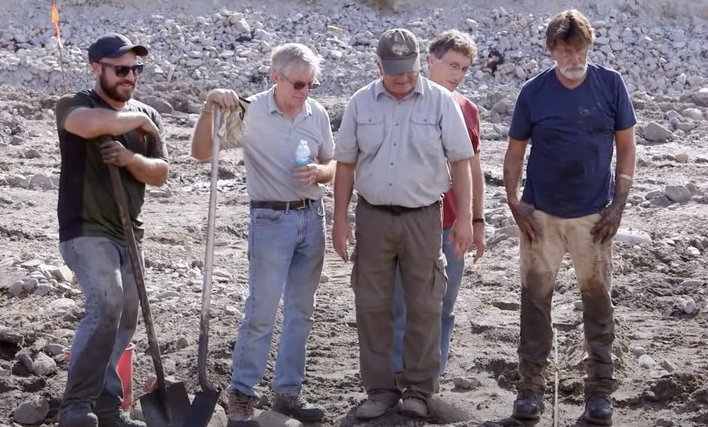
But the real significance of the ancient wood will depend on what further examination establishes.
If the fragments are securely associated with a human-made feature, that could help explain how people worked underground.
If advanced scans reveal a corresponding structure, investigators may gain a more precise target.
And if historical analysis can place the findings within a credible period, the combined evidence could reveal a chapter of Oak Island’s history that has remained obscure.
The breakthrough might not arrive as a dramatic discovery of gold.
It could begin with something much smaller: a reliable date, a distinctive tool mark, a confirmed construction feature, or a connection between two clues that previously appeared unrelated.
Such findings would not end the mystery overnight.
They could, however, narrow the possibilities and help the Fellowship decide where to focus its efforts next.
That is why a few fragments of timber have the potential to command so much attention.
They may be ordinary remnants of past activity—or pieces of a much larger puzzle whose shape has yet to become clear.
The team still has questions to answer.
The origin of the wood requires evidence.
The scanning results must be interpreted carefully.
And any historical connection must stand up to scrutiny.
Yet the central question remains irresistibly simple:
what happened deep beneath Oak Island, and why did those pieces of timber end up there?
Until the evidence provides a reliable answer, the mystery remains open.
But if the wood, the scans, and the historical investigation begin pointing in the same direction, the Fellowship could find itself approaching a breakthrough more meaningful than another isolated artifact.
The deepest secret may not be what the team finds underground.
It may be the explanation that finally connects everything they have found so far.
THEO DÕI CHÚNG TÔI TRÊN FACEBOOK