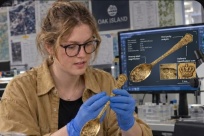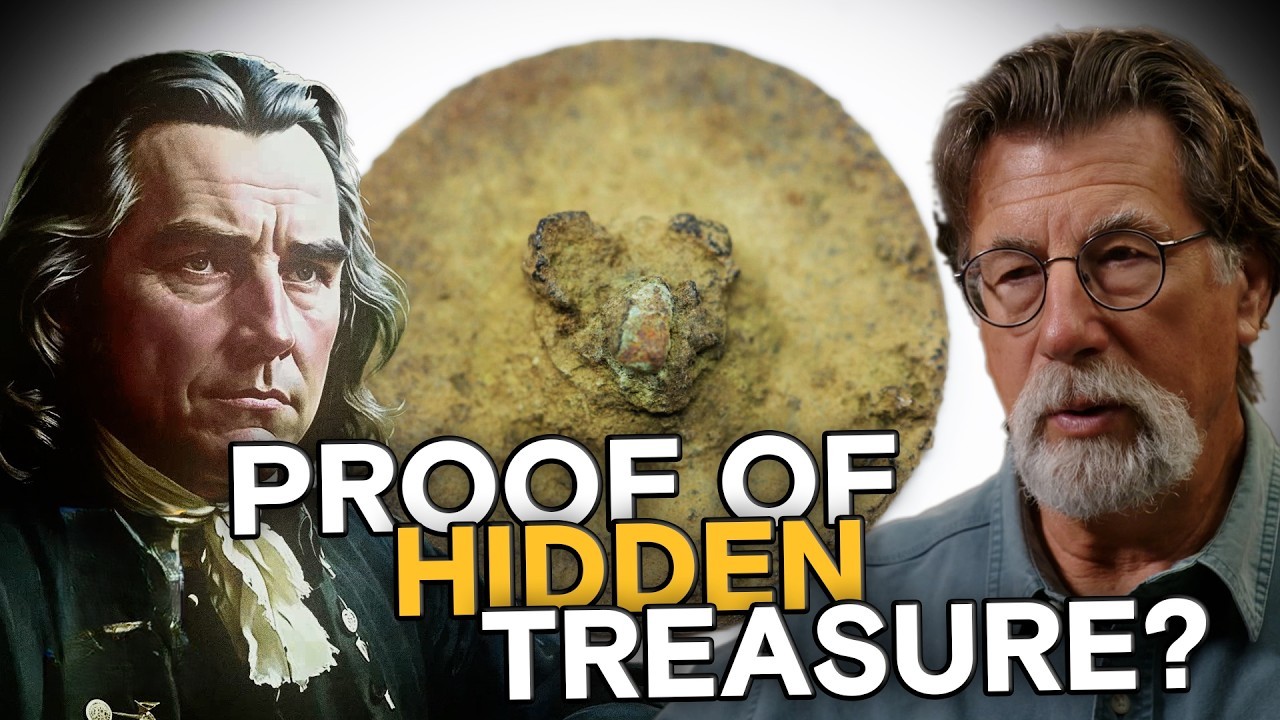
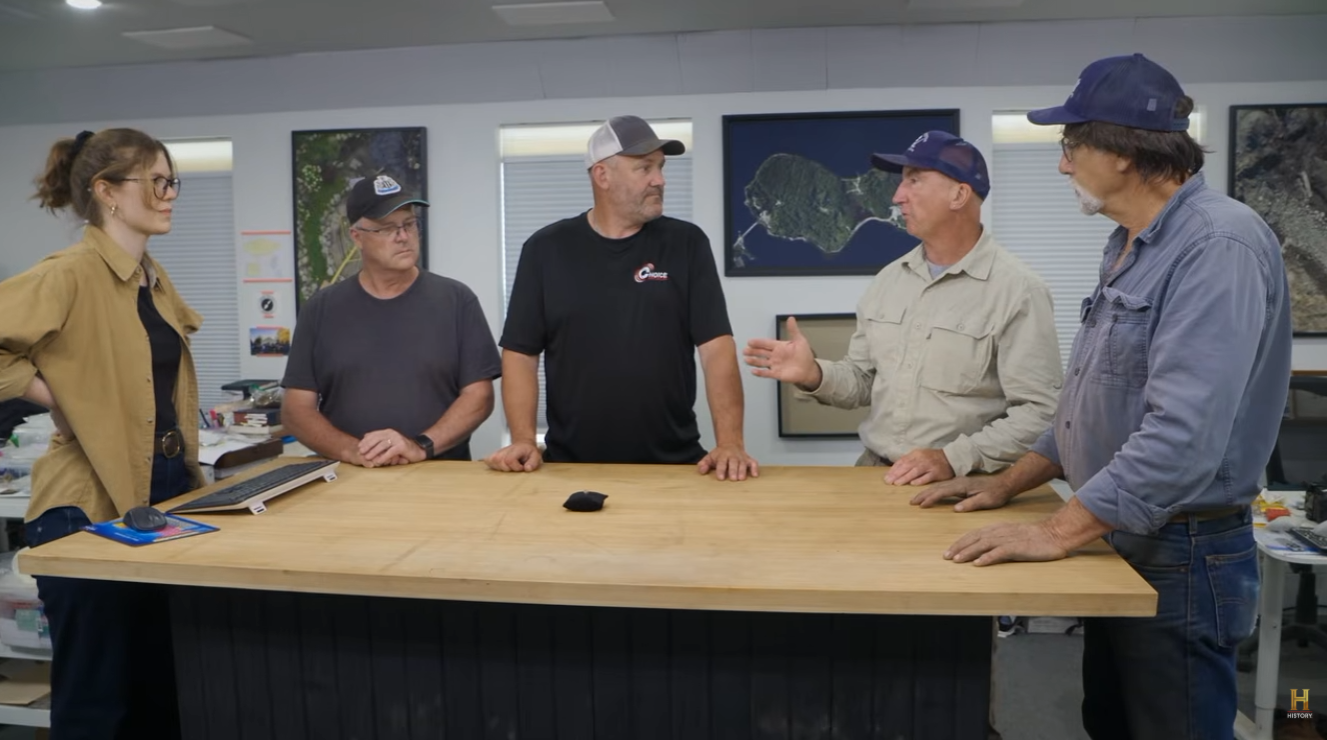
Gary Drayton and Jack Begley returned to more than ten tons of spoil taken from the mysterious stone foundation on Lot 5, where the team has already recovered a growing collection of buttons, lead objects and other unexplained finds.
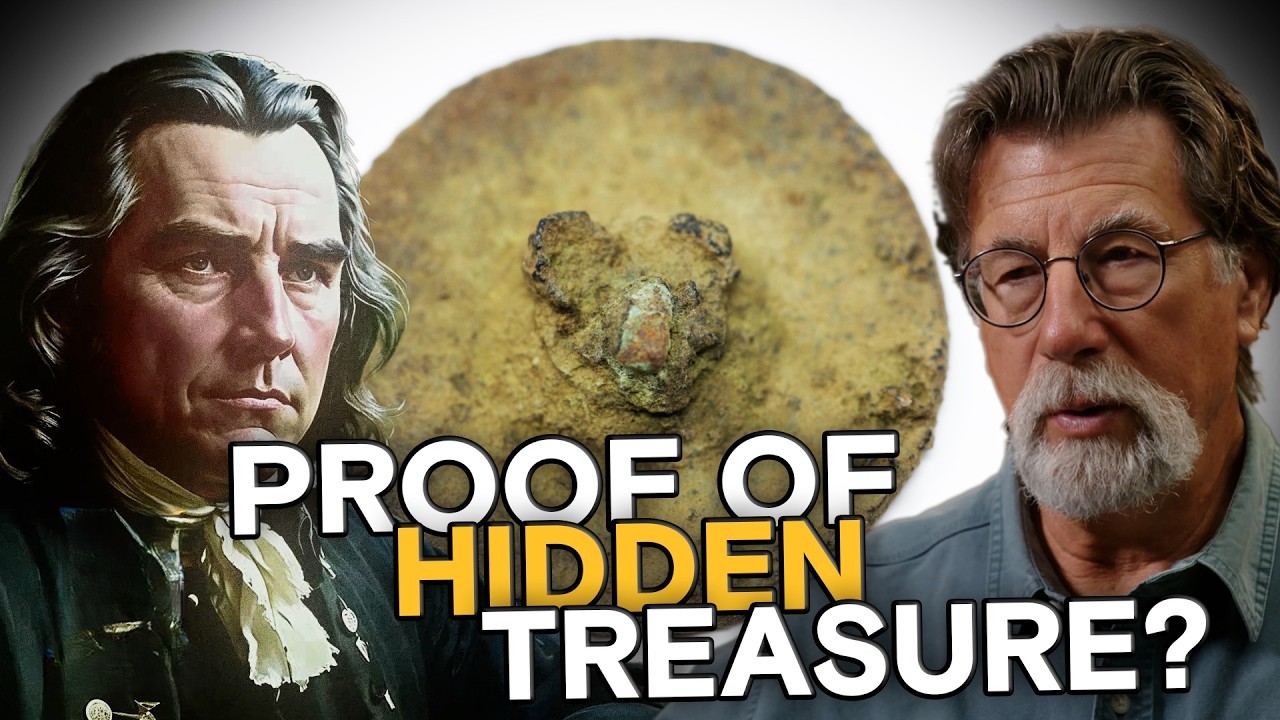
Their latest search quickly produced another old button and a lead ball before Gary detected something that initially appeared far more significant — what looked like a small piece of hammered silver.
Archaeologist Helen Sheldon agreed that the object appeared to have been cut and could potentially have been part of an old coin.
However, laboratory analysis later delivered disappointing news.
Archaeometallurgist Emma Culligan used X-ray fluorescence testing and determined that the object contained high levels of aluminum, proving that it was modern.
But another artifact recovered alongside it proved much harder to explain.
The lead ball was made from nearly pure lead and appeared to contain unusual markings or deliberate modifications.
Emma said its composition did not indicate a modern object, while the team raised the possibility that it could predate 1700.
For Rick Lagina, that immediately increased the importance of the find.
Lot 5 has already produced several artifacts believed to predate the 18th century, including a scalloped lead token and a button featuring a starburst design.
Those discoveries have strengthened the team’s belief that the rounded stone foundation may have been created well before the commonly accepted beginning of the Money Pit mystery.
The investigation then produced another surprise.
While archaeologists continued excavating the foundation, Gary detected a powerful non-ferrous signal inside the feature.
He suggested the target could be copper, lead or even gold.
When the archaeologists eventually uncovered it, the object turned out to be an ornate copper-alloy button.
Its highly corroded surface suggested significant age, but scans performed in the Oak Island laboratory revealed something even more intriguing.
X-ray fluorescence mapping exposed an elaborate floral pattern hidden beneath the corrosion.
Gary described the artifact as having an English appearance, while the team estimated it could date to the 1700s or potentially even the late 1600s.
That possible date immediately raised another controversial Oak Island theory.
The team has previously investigated claims linking 17th-century English figure Sir William Phips to Oak Island.
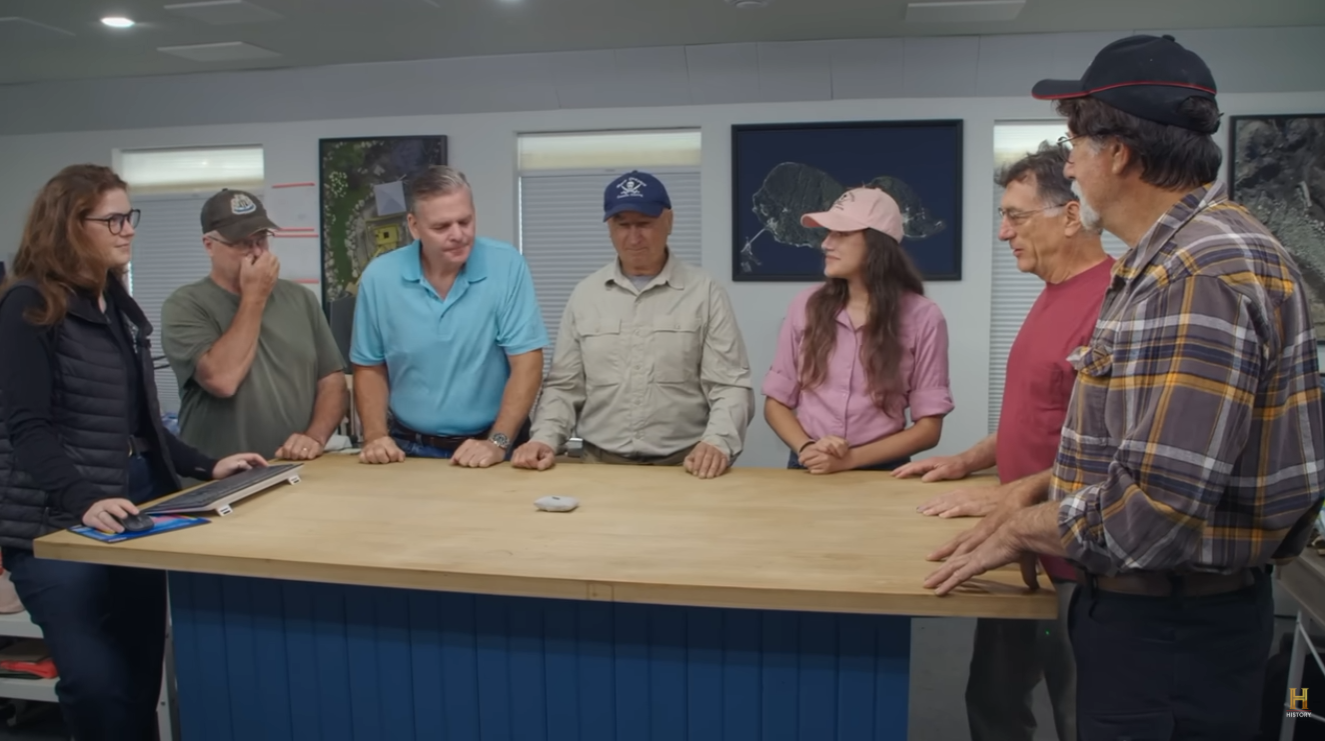
In 1687, Phips conducted salvage operations on the wreck of the Spanish treasure ship Concepción near the Dominican Republic.
According to one theory explored by the show, Phips and Captain Andrew Belcher may have secretly transported part of the recovered treasure to Oak Island.
The team has already linked other Lot 5 discoveries to the same historical period.
If the newly discovered button can be confirmed as a late-1600s artifact, it could provide another piece of evidence suggesting substantial activity occurred on Lot 5 decades before the Money Pit was officially discovered.
That does not prove Phips buried treasure on Oak Island.
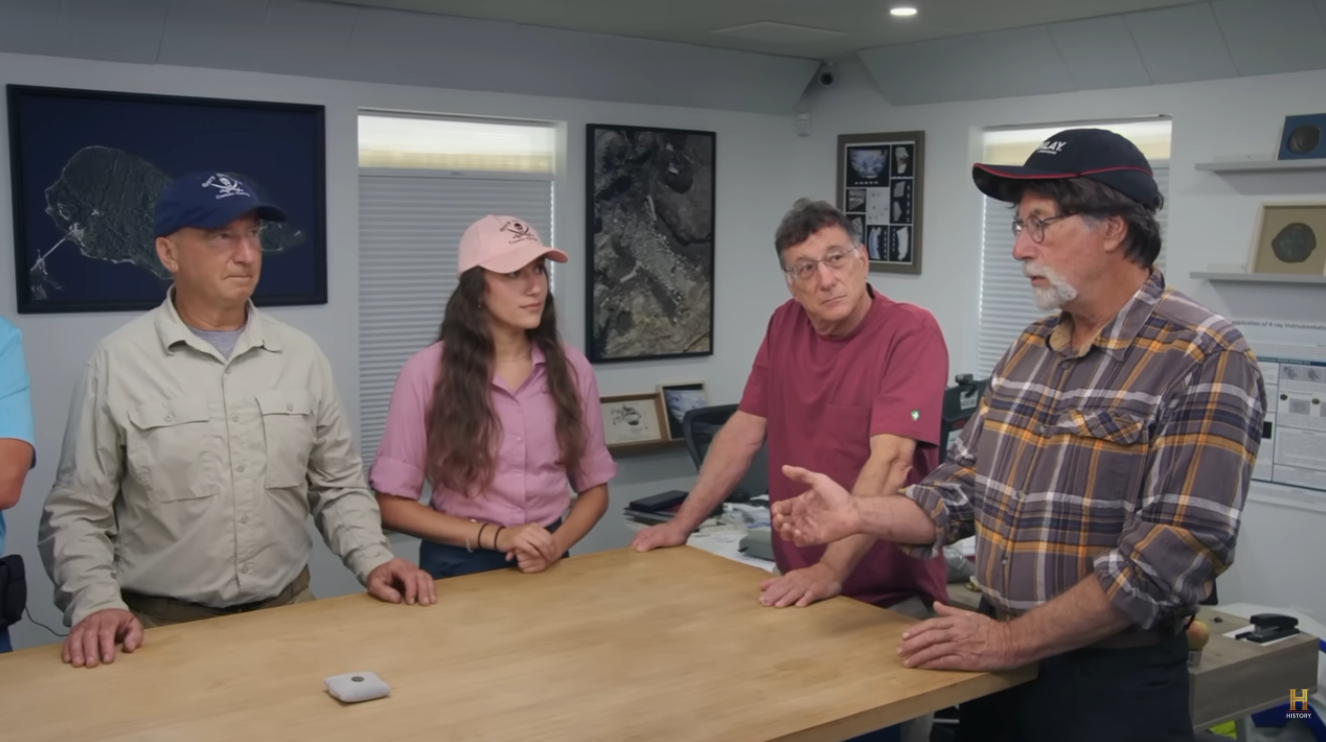
But it adds to a growing collection of finds suggesting the mysterious stone foundation may be much older and more significant than originally believed.
For Rick Lagina and the team, the question surrounding Lot 5 is becoming increasingly difficult to ignore.
Who built the structure, what was it used for, and why are so many unusually old artifacts continuing to appear around it?
The more the team digs, the more Lot 5 appears capable of rewriting the timeline of the entire Oak Island mystery.
THEO DÕI CHÚNG TÔI TRÊN FACEBOOK