Get ready to be recruited back into the high-stakes world of Lioness.
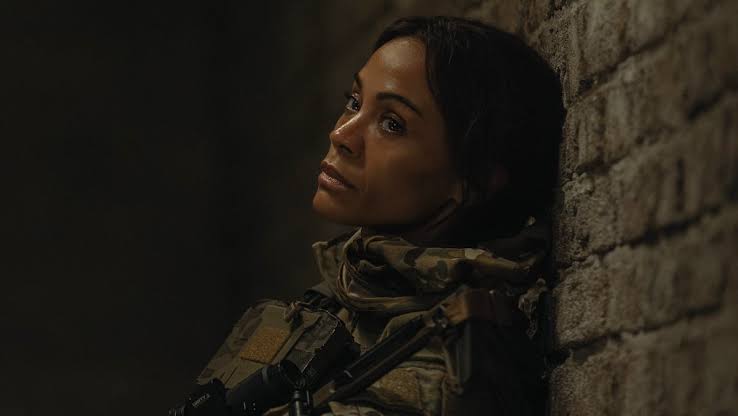
The espionage thriller series, which premiered its season 3 on Aug. 2, revolves around Joe McNamara, a CIA operative portrayed by Zoe Saldaña, who leads the Lioness program — a covert, all-female unit of special operatives tasked with infiltrating terrorist organizations.
Like most Taylor Sheridan shows, Lioness features a heady mix of action and morally complex characters exploring nuanced themes of justice, family and loyalty. However, while most of his projects center around men, Lioness puts women at the forefront.
“He has a natural way of writing women, striking female characters that are really deep,” Saldaña told USA Today of the showrunner in August 2023.
Decades before the series premiered, the United States’ military established a real, all-female unit within the U.S. Marines known as Team Lioness.
Here’s everything to know about the true story behind Lioness and the real women that inspired the show.
Who were the real Lionesses?

In the series, Lioness is portrayed as being a covert program run by the CIA and filled with female agents recruited from various branches of military — Cruz Manuelos (Laysla De Oliveira) is a Marine whereas Josie Carrillo (Genesis Rodriguez) is an Army pilot. However, the reality was a little bit different.
The real-life Lioness program wasn’t a super-secret CIA unit, but rather one developed by the U.S. Marine Corps. Initially, Lionesses were limited to female Marines, but eventually the Army adopted the program and employed their own Lioness teams, according to the Army University Press.
While Cruz and Josie represent Lioness members from both branches of the military, the show portrays them as being hand-selected recruits. Members of the Lioness program, however, volunteered for the position, per the Marine Corps Association.
One thing that both the fictional and real-life Lionesses have in common, though, is their courage. Jill Wagner, an executive producer and actress on Lioness, pitched the concept to Sheridan as a way to honor female soldiers.
“I am not easily starstruck, but these women are my heroes,” she told Parade in December 2024. “I have the most profound respect for the women who lay down their lives for this country.”
When was the Lioness Program established?

The Lioness Program, also known as Task Force Lioness, was established by the Marine Corps during the Second Gulf War.
Specifically, it started in 2003 with a group of boots-on-the-ground female soldiers deployed to Iraq, according to Task & Purpose.
Due to strict Muslim doctrines that prohibit any man from touching an unrelated woman, male members of the American military would not search female civilians.
Seeing this, insurgents began using women to smuggle weapons as a workaround, per the Marine Corps Air Ground Combat Center Twentynine Palms. Thus, the Team Lioness was born.
Soon, both the Marine Corps and the Army were using Lioness teams attached to combat units in Iraq and Afghanistan.
What did Team Lioness do?

The Lioness Program was created so that Iraqi women could be searched in a culturally appropriate way, both to respect their religious backgrounds and to prevent women from being used to conduct terrorist attacks.
Lioness teams typically consisted of two female soldiers who were assigned to combat and infantry units in Iraq and Afghanistan.
These Lionesses would be responsible for searching Iraqi women and children for weapons, money or other contraband at security checkpoints.
Aside from performing searches, Team Lioness members actively worked to build rapport, gather intelligence and provide a sense of security to civilians.
Eventually, they were tasked with training local women on how to conduct proper searches on others with the goal of transitioning the security duties.
Despite their mission being one of cultural engagement and human intelligence, members of Team Lioness did face active combat. Since they were working directly with infantry units in dangerous areas, they frequently faced firefights and IED attacks.
What happened to the Lioness Program?
The Lioness Program is no longer active today, but they left a lasting imprint on the military.
While the Paramount+ series portrays Lioness as a long term unit, the real Lioness Program was intended as a short term measure.
In 2009, the Marine Corps officially established Female Engagement Teams (FET), which were more structured teams that had a more dedicated and organized community-focused mission.
Then, in 2013, the Department of Defense lifted the combat exclusion rule, meaning female members of the military could officially join combat units. Because of that, separate, ad-hoc programs for women in the military are no longer necessary.
THEO DÕI CHÚNG TÔI TRÊN FACEBOOK