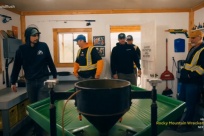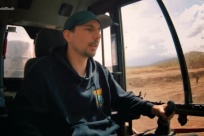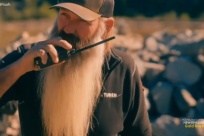
In the hyper-competitive, adrenaline-fueled theater of Discovery Channel’s Gold Rush, ambition is a double-edged sword. For 31-year-old mining prodigy Parker Schnabel, Season 17 was supposed to be a masterclass in industrial dominance.Driven by an agonizing defeat to Tony Beets and an impossible 13,000-ounce goal, Parker unleashed an unprecedented mechanical armada: four massive wash plants running simultaneously in the Quagmire Cut. It was designed to be an unstoppable, money-printing empire.
But Mother Nature possesses a ruthless, unforgiving sense of humor. The highly anticipated episode appropriately titled "Low-Grade Panic" has exposed a terrifying, multi-million-dollar reality check. Parker’s massive empire isn't failing because of shattered conveyor belts, blown engines, or greenhorn mistakes. It is failing because of the most silent, deadly killer in the Yukon: barren dirt.
The Terrifying Math of Low-Grade Ground
To the casual viewer, dirt is just dirt. But in the highly leveraged world of commercial placer mining, "low-grade" is an apocalyptic death sentence. Parker’s elite crew has violently slammed into a massive geological dead zone where the gold density has completely plummeted.
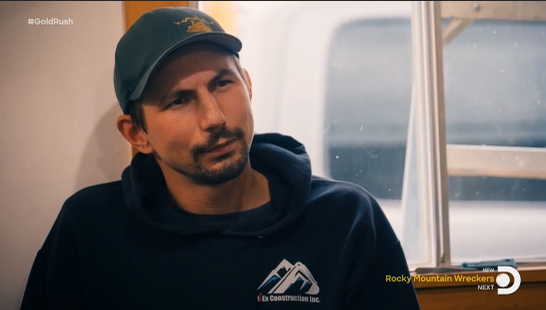
When a mine boss hits a low-grade paystreak, the financial math instantly flips upside down. The 13,000-ounce target does not magically shrink to accommodate the bad ground, which means the crew is violently forced to process significantly more raw volume just to extract a fraction of the gold. Parker has to move twice the amount of earth, dig twice as deep into the permafrost, and haul twice as many loads just to meet his daily break-even point.
This triggers a catastrophic financial hemorrhage.In the commercial mining industry, diesel fuel consumption for massive earth-moving operations can account for a staggering 40% of the total mining cost.Heavy ore haulage alone consumes massive amounts of a site's total energy output. Parker’s fleet of 50-ton Volvo rock trucks and heavy excavators are burning through tens of thousands of dollars in premium diesel fuel every single day, all to wash completely worthless mud.
The 4-Plant Slaughterhouse
Parker thought that running four plants would act as an insurance policy against failure, a brute-force method to guarantee his Klondike crown. Instead, his aggressive 4-plant strategy has mutated into a multi-million-dollar slaughterhouse.
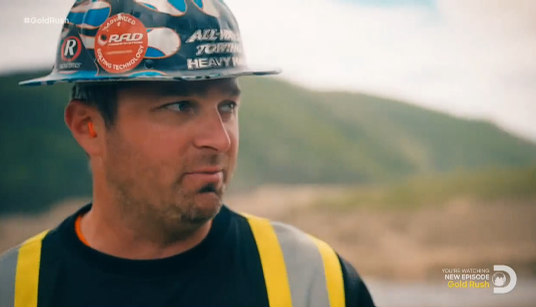
Because the dirt is heavily depleted, the massive wash plants are starving for gold. To compensate for the terrifyingly low yields, Parker is screaming at his crew to push the heavy iron past its absolute breaking point. Excavators are ripping through the permafrost at dangerous speeds. Water pumps are redlining to wash the artificially increased volume. The wear and tear on the steel is exponential, causing bearings to scream, hydraulic lines to burst, and heavy rubber belts to violently snap.
Running four hungry wash plants at maximum capacity on low-grade dirt means Parker is literally multiplying his financial losses by four. He is rapidly chewing through his multi-million-dollar operational budget, paying top-tier wages, and accelerating the mechanical death of his heavy equipment for a terrifyingly empty gold safe.
The Psychological Collapse
The most devastating casualty of "Low-Grade Panic" isn't the bank account; it is the human spirit. The psychological toll of working 16-hour shifts in the freezing mud, pushing your body and your machines to the absolute limit, only to see a pathetic 20-ounce cleanout in the gold room, is completely shattering the crew’s morale. The mechanics are exhausted from fighting endless breakdowns caused by the over-stressed machines. The rock truck drivers are burning out from the endless, frantic loops. The entire camp is suffocating under the weight of Parker's unreachable ambition.
The Breaking Point
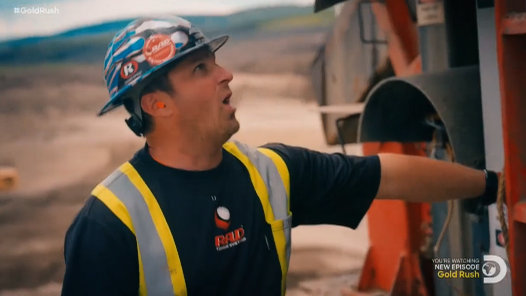
This is the ultimate, paralyzing nightmare for a mine boss. You cannot weld barren ground, and you cannot yell at the mud to produce more gold. The Quagmire Cut is actively swallowing Parker Schnabel’s wealth alive. Every single bucket of low-grade dirt dumped into the hopper is a fatal stab at his 13,000-ounce dream.
Parker is trapped in the most dangerous corner of his entire career. If he stays in the Quagmire Cut and stubbornly tries to force the earth to pay out, he will inevitably go completely bankrupt before the winter freeze sets in. If he shuts down the four plants to relocate the entire operation, he loses weeks of critical production and officially surrenders the Klondike crown to Tony Beets.
The heavy iron is roaring, the diesel is burning, but the gold is gone. Mother Nature has successfully weaponized the dirt against the greatest young miner in Yukon history, and his $130 million empire is currently standing on the absolute brink of total annihilation.
THEO DÕI CHÚNG TÔI TRÊN FACEBOOK