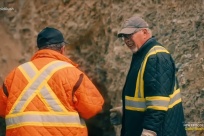
Gold Rush Season 17 has just delivered a jaw-dropping geological twist that could turn newcomer Greg Gibson from a struggling rookie into a full-blown Klondike juggernaut. Initially, Gibson ordered his veteran foreman Buzz Legault to lock down Trail Hill’s White Channel—the legendary ancient riverbed gravel that Yukon miners have relied on for over a century. It was supposed to be a safe, predictable grind for steady placer gold.
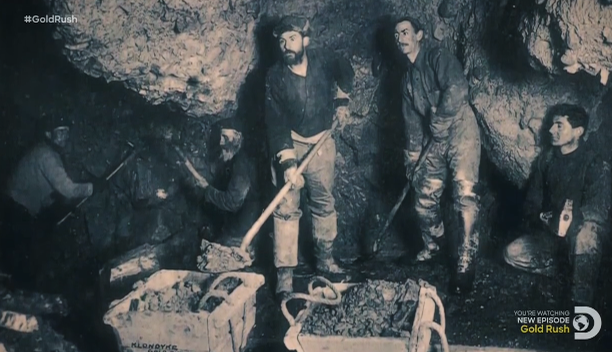
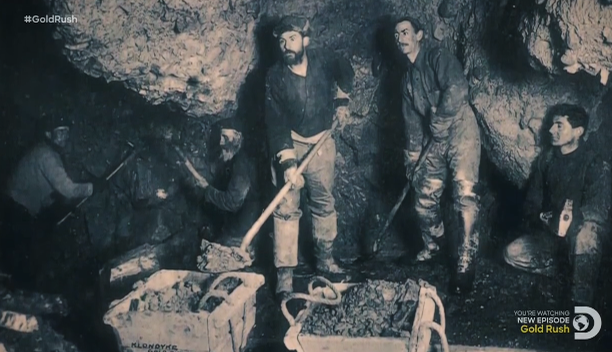
Instead, as excavators tore deeper into the frozen earth, Team Gibson punched straight into a ghostly relic of the 1896 stampede: an abandoned old-timer drift mine shaft, flanked by a sinister, pitch-black layer of graphite-packed rock. For Greg Gibson—a driven businessman who refuses to settle for running an ordinary 60-acre claim—that strange dark stratum instantly became the ultimate high-stakes gamble between a guaranteed paycheck and a season-altering lottery ticket.
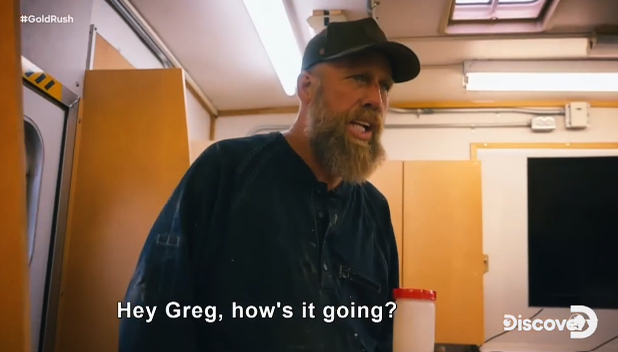
The Old-Timer Tunnel and the Slippery Graphite Trap
To understand why the discovery of that forgotten tunnel sent shockwaves through camp, you have to look at the razor-thin line between treasure and disaster in Klondike geology. White Channel gravel is the ultimate known entity: miners know it holds gold, they know how to wash it, and the risk is low—but it rarely delivers earth-shattering surprises.
The mysterious black earth running alongside the old-timer shaft, however, is black schist—a completely different, untamed beast. Formed as metamorphic rock under intense heat and pressure, black schist packed with graphite is a telltale geological fingerprint that superheated hydrothermal waters once surged through the earth during ancient deformation, frequently depositing rich gold alongside quartz veins.
Yet for Buzz Legault, that golden upside came wrapped in a lethal mechanical trap. Graphite is ultra-fine and notoriously slippery. If Buzz simply scooped that black schist and blasted it straight through their massive Hot Box shaker-deck wash plant, the fine gold would cling to the greasy graphite and wash straight out into the tailings pile forever. While Greg Gibson saw a shortcut to an empire, Buzz knew one careless move would flush millions of dollars into the mud.
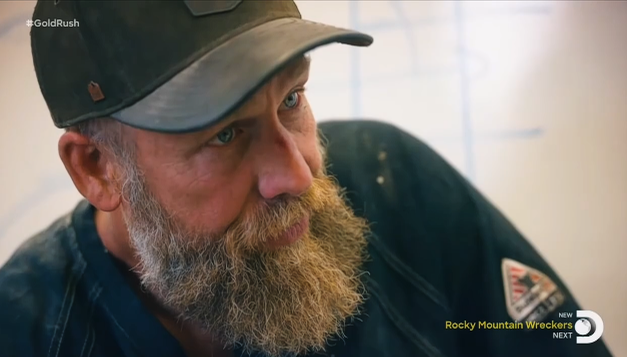
Buzz Legault’s Two-Step Survival Masterclass
Refusing to gamble their flagship wash plant on blind hope, Buzz Legault stepped up with the kind of battle-hardened Klondike precision that separates true veterans from amateurs. Before risking a single hour on the Hot Box, Buzz executed two critical survival moves that changed the trajectory of Team Gibson’s entire season.
First, Buzz drove test sampling all the way down to solid bedrock, pulling concentrates from the deepest contact zone and panning them out by hand. Watching heavy yellow specks stay locked in the bottom of the pan gave Buzz the ironclad proof he needed: the gold in the black schist could actually be captured without floating away on the graphite.
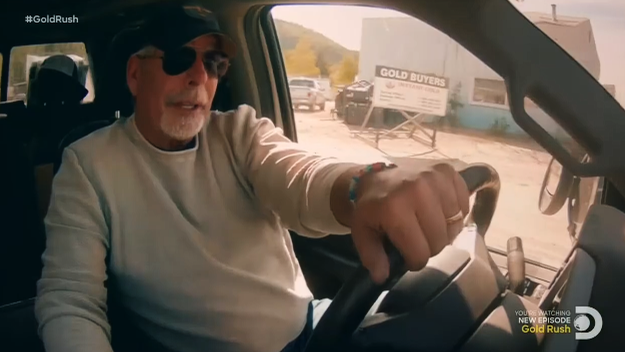
Second, recognizing that violent tumbling and scrubbing action was required to break up the slick mineral bonds, Buzz borrowed a compact test trommel. Ignoring any impatience to rush into full-scale production, Buzz insisted that a rotating trommel was the only weapon capable of properly washing the black dirt—setting up a strict, head-to-head 20-yard showdown between the safe White Channel gravel and the mysterious black schist.
$150,000 vs. A Season-Changing Explosion
When Buzz ran the 20-yard trials and weighed the results, the numbers detonated like dynamite inside the Trail Hill gold room.
First came the White Channel test: 20 yards of the familiar white riverbed gravel yielded an impressive 35.46 ounces—worth roughly $150,000 at booming market prices. For almost any crew in the Yukon, pulling $150,000 out of a tiny test batch would be cause for immediate celebration.
Yet that triumph was completely eclipsed the moment Buzz washed 20 yards of the black schist through the borrowed trommel. The gold that poured out of the test run was so staggering that Greg Gibson openly declared it changes the entire season. White Channel was reliable cash in the bank, but the black schist was a pure, uncut geological jackpot—proving that the old-timers who dug that drift shaft over a century ago had barely scratched the surface of a massive hidden deposit.
The Desperate Hunt for a Monster Trommel
Greg Gibson didn't pour millions of dollars into Bonanza Creek just to scrape a living off a modest 60-acre claim—he came to the Klondike to build an empire capable of rivaling Parker Schnabel and Tony Beets. Now that the black schist has proven its explosive potential, sitting on a tiny borrowed test machine is no longer an option.
Immediately following the test reveal, Greg handed Buzz Legault an urgent, high-pressure new mission: drop everything and hunt down a massive, industrial-scale trommel capable of chewing through mountains of this slippery black paydirt before winter frost locks the ground solid. With millions within reach and the clock ticking down on Gold Rush Season 17, Buzz now faces a frantic race across the north to secure the exact piece of steel needed to turn Trail Hill’s dark secret into Klondike history.
THEO DÕI CHÚNG TÔI TRÊN FACEBOOK