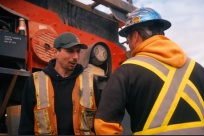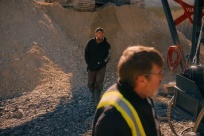
There is a moment in every Klondike mining season when the heavy iron finally wakes up. The air fills with the acrid scent of burning diesel, the ground physically vibrates, and the silence of the Canadian wilderness is shattered by the deafening roar of industrial machinery. But for fans of Discovery Channel’s Gold Rush, Season 17 just delivered a visual spectacle that defies all conventional logic and operational sanity.
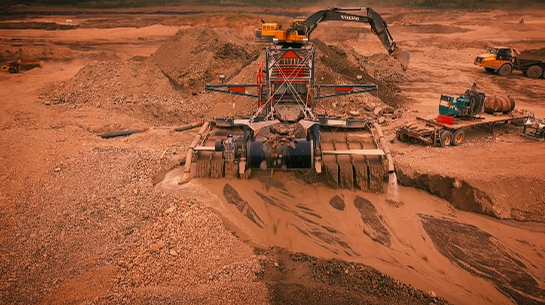
Parker Schnabel did not just fire up a wash plant. In a terrifying, breathtaking display of sheer industrial dominance, his elite crew officially fired up four massive commercial wash plants completely simultaneously.
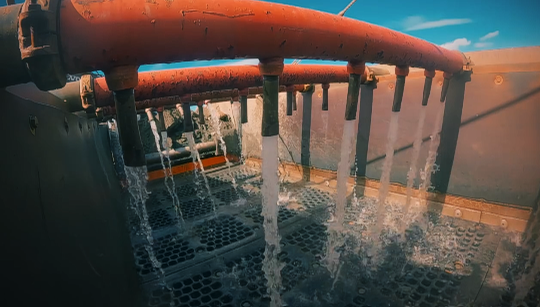
As the cameras pan across the sprawling Dominion Creek claim, viewers are treated to an unprecedented, chaotic symphony of dirt moving. Four massive rubber conveyor belts are aggressively rolling. Four high-pressure water cannons are blasting thousands of gallons into the spinning trommels. And carving through the mud below, an endless, synchronized convoy of 50-ton rock trucks is lined up, desperately feeding paydirt into the steel hoppers of Big Red, Golden Goose, Bob, and the newly assembled Roxan.
It is the ultimate display of Klondike power. But behind the magnificent visuals lies a terrifying logistical house of cards that could instantly collapse Parker’s entire multi-million-dollar empire.
The $130 Million Motivation
To understand why a 31-year-old mine boss would willingly subject himself and his exhausted crew to this level of operational torture, you have to look at the global commodities market.
Global economic tensions have pushed the price of raw gold to a mind-boggling, historic high of $5,000 an ounce. This completely alters the mathematics of the Yukon. Parker’s aggressive, record-shattering Season 17 goals are no longer just about beating his rival Tony Beets—they are about capitalizing on a once-in-a-lifetime financial anomaly.
If Parker can keep these four plants running at maximum efficiency and hit his massive ounce targets, the potential seasonal payout sitting in the Dominion Creek mud is a staggering $130 million. When you are staring down a nine-figure payday, conservative mining strategies are thrown completely out the window. Parker Schnabel is pushing all of his chips to the center of the table. He is going completely, recklessly all-in.
The X4 Multiplier: A Logistical Nightmare
However, running four plants simultaneously doesn't just quadruple your gold output; it instantly quadruples your overhead and your vulnerability.
The logistical reality of this operation is suffocating. Team Parker is currently burning fuel multiplied by four. A single massive wash plant and its supporting fleet of excavators and loaders can easily consume thousands of gallons of diesel a day. Parker’s fuel bill is now expanding at an astronomical, terrifying rate, requiring constant tanker deliveries just to keep the machines from stalling out mid-shift.
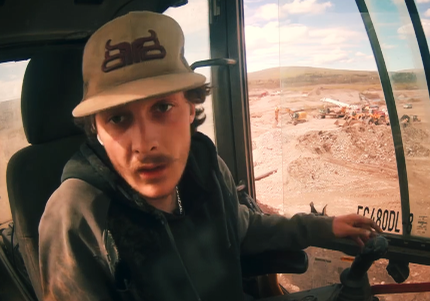
Furthermore, the operation demands manpower multiplied by four. Mechanics Mitch Blaschke and Tyson Lee cannot clone themselves. If Big Red blows a hydraulic line while a conveyor belt jams on Bob, the mechanical team is forced into a frantic triage situation. The heavy equipment operators are pushing through grueling, 20-hour shifts, bouncing over the treacherous mud of the Quagmire Cut with zero margin for error. Fatigue is the ultimate enemy in the Klondike, and an exhausted crew operating four times the machinery is a recipe for a catastrophic industrial accident.
The Fatal Flaw: The Water Domino Effect
Despite the fuel costs and the crew exhaustion, there is one critical vulnerability that could destroy the entire $130 million dream in a matter of minutes.
Water multiplied by four.
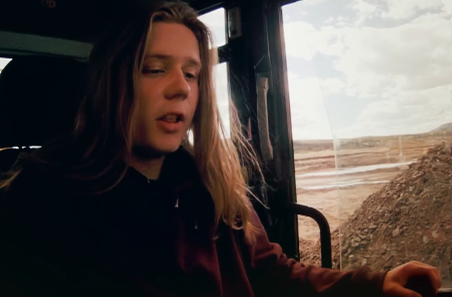
You cannot manufacture water in the Yukon. Placer mining relies entirely on the natural, localized water table, fed by creeks and captured in massive, engineered settling ponds. A single wash plant requires thousands of gallons of high-pressure water per minute to effectively separate the heavy gold from the barren rock and sticky clay.
By firing up four plants simultaneously in the same localized area, Parker Schnabel has created an artificial drought on his own claim. He is draining his settling ponds at an unprecedented, terrifying velocity.
This creates a fatal domino effect. If the massive pumps feeding Roxan run dry, it means the localized water table has dropped below the intake threshold. And if one plant runs out of water, it is mathematically guaranteed that the other three plants will immediately begin to thirst as well. Without a massive, continuous flow of water, the sticky Quagmire Cut clay will instantly clog the shaker decks, sending millions of dollars in fine gold washing straight out into the tailings ponds.

Parker Schnabel has engineered the most powerful dirt-moving machine in the history of the Klondike. But he is currently walking a razor-thin tightrope above a $130 million abyss. If the water stops flowing, the entire four-plant juggernaut will violently crash into the mud.
THEO DÕI CHÚNG TÔI TRÊN FACEBOOK