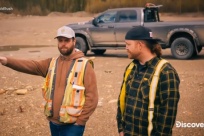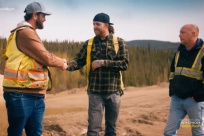
In the hyper-competitive, adrenaline-fueled theater of Discovery Channel’s Gold Rush, Parker Schnabel has always viewed the Klondike permafrost as his primary enemy. But as Season 17 accelerates into a chaotic, multi-million-dollar death spiral, the 31-year-old mining prodigy is realizing that his greatest threat isn't the barren dirt or the freezing temperatures. His greatest threat is the rapidly fracturing psychology of his own elite crew.
Driven by the agonizing sting of losing to Tony Beets in Season 16, Parker launched the most aggressive, reckless gamble of his entire career. To hit his seemingly impossible 13,000-ounce goal, he fired up four colossal wash plants simultaneously. On a boardroom whiteboard, the mathematical theory was flawless: quadruple the heavy iron, quadruple the gold, and claim the undisputed Klondike crown.
But in the unforgiving, freezing mud of the Yukon, Parker’s massive scale-up is proving a fatal industrial paradox. Running four plants isn't multiplying his wealth by four; it is violently multiplying his failure points.
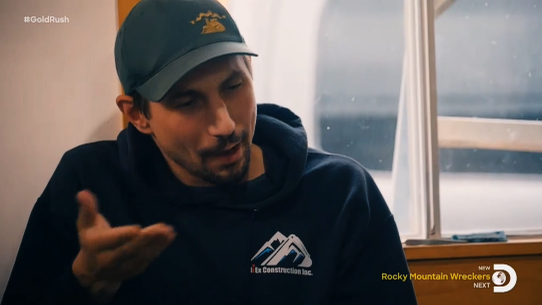
The Firefighter Paradox
The Quagmire Cut has completely ceased to be a gold mining operation. It has devolved into a frantic, multi-million-dollar emergency response zone.
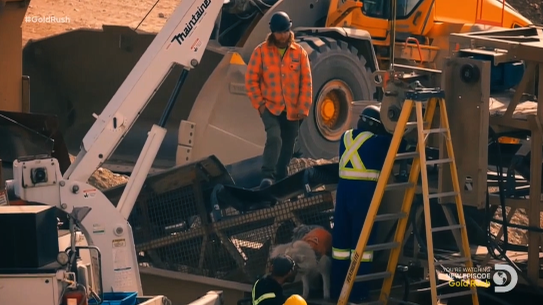
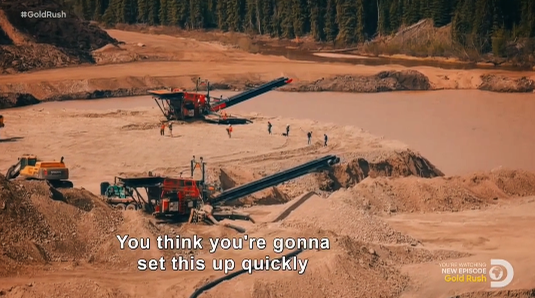
Parker’s elite, hand-picked crew of mechanics and operators are no longer focused on chasing paydirt. They have been brutally reduced to exhausted firefighters, running in endless, panicked circles just to keep the operation from shaking itself to pieces. The logistical chain required to feed four wash plants is terrifyingly fragile. Every single beast requires a dedicated heavy excavator, a fleet of 50-ton Volvo rock trucks, high-capacity water pumps, and hundreds of feet of heavy rubber conveyors.
If just one single link in that massive chain snaps, the entire empire stops. And right now, the chain is snapping every single hour.
Instead of dialing in sluice box angles to catch fine gold, the crew is spending 16-hour shifts up to their elbows in scalding hydraulic fluid. They are violently unclogging jammed tailing conveyors, desperately patching blown water pumps, and simply praying to the Klondike gods that the overworked excavators don't die mid-swing.
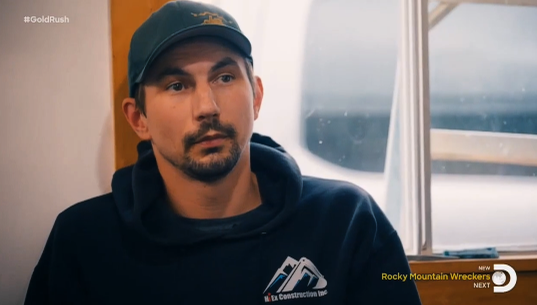
The Classic Hyper-Growth Collapse
Industry experts and veteran mine bosses are watching the Schnabel camp with absolute horror. This is the classic, textbook paradox of the industrial world: scaling up too fast is exactly what kills operations.
Parker thought he could buy his way to 13,000 ounces with brute force and raw tonnage. But scale without operational bandwidth is just expensive chaos. Every hour a machine breaks down, Parker isn't just losing gold—he is burning thousands of dollars in wasted diesel fuel and top-tier wages. The pressure to keep four plants fed is causing operators to rush, which leads to massive mistakes, which leads to catastrophic breakdowns. It is a vicious, inescapable death spiral of his own making.
The Mutiny Brewing in the Mud
The heaviest casualty of this 4-plant disaster is human morale. The men who have bled for Parker Schnabel for years are physically and mentally shattered. The sleep deprivation is catastrophic. The constant screaming of metal on metal, combined with Parker's relentless radio demands for more yardage, is pushing the crew to their absolute breaking point.
According to explosive leaks from the camp, a full-scale mutiny was quietly brewing. The veteran mechanics and lead operators had reportedly reached their absolute limit. They were preparing to march directly to Parker’s dusty operations shack to deliver a devastating, non-negotiable ultimatum: shut down two of the wash plants immediately so they can actually manage the workflow, or the entire core crew walks off the claim and leaves him to run the multi-million-dollar empire alone.
The Blue Anomaly
The exhausted crew gathered outside the mechanic's tent, their faces covered in black grease, fully prepared to confront their boss and potentially end Season 17 on the spot.
But before they could take a single step toward Parker's trailer, a deafening, unnatural shrieking sound erupted from Plant 3. It didn't sound like a blown bearing or a snapped belt. It sounded like solid steel was violently tearing itself apart from the inside out.
The impending mutiny was instantly paused as the mechanics sprinted toward the massive machine. They frantically hit the kill switches, plunging the roaring plant into a terrifying silence. When the lead mechanic climbed up the steel gantry and ripped open the sluice box to inspect the catastrophic damage, he froze in absolute horror.
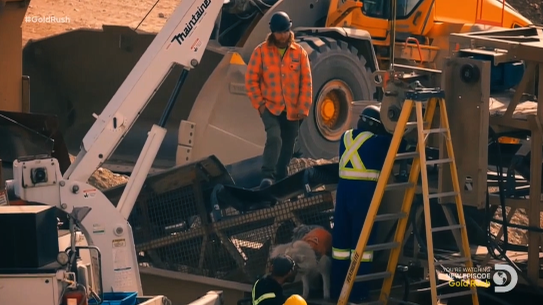
The heavy, reinforced steel riffles weren't just broken—they were physically melting.
Caught deep inside the melted grooves of the steel was not heavy yellow gold, but a dense, jagged layer of bizarre, iridescent blue crystalline minerals. And as the mechanic leaned in closer to inspect the impossible substance, the digital radiation monitor clipped to his safety vest suddenly woke up, emitting a frantic, piercing, high-pitched alarm.
The crew was ready to walk out over broken machines and extreme exhaustion, but they just accidentally unearthed something that is actively melting steel and emitting dangerous levels of radiation. The mutiny just took a backseat to a terrifying geological hazard. What exactly did Parker Schnabel’s massive 4-plant armada dig up from the deepest layer of the Klondike permafrost, and is the entire crew now trapped in a toxic quarantine zone?
THEO DÕI CHÚNG TÔI TRÊN FACEBOOK