In the season premiere of *Expedition Unknown*, Josh Gates embarks on a heart-wrenching quest to peer into the abyssal depths of Subic Bay, seeking the resting place of one of the most infamous among them.
What began as an exploration of maritime tragedy quickly escalated into a mission of remembrance, as Josh joined forces with veterans and historians determined to bring our heroes home. The history of these ships is one of desperate survival, brutal conditions, and a devastating irony: these men, already suffering at the hands of their captors, ultimately became the unknowing targets of their own Allied forces. As Josh navigates the murky, memory-soaked waters of the Philippines, he unearths not just the rusted iron of a sunken freighter, but the raw, unvarnished truth of a conflict that still echoes from the ocean floor.
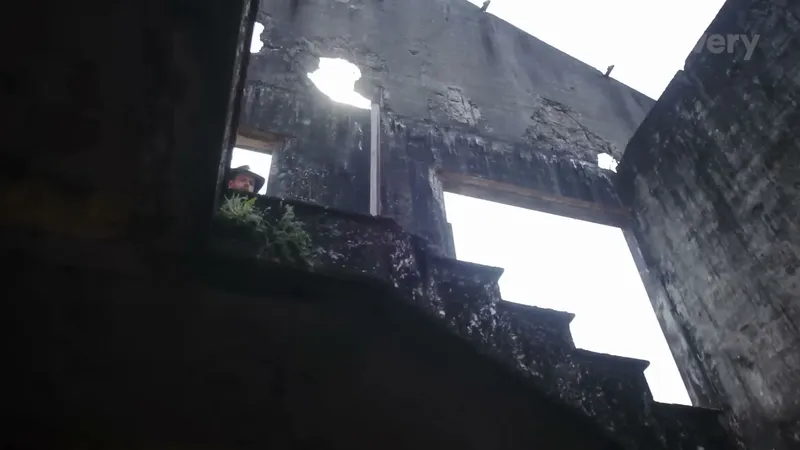
Josh Gates walking down the decaying, concrete stairs of a ruined fortification on Corregidor Island.
Into the Heart of a Forgotten War
The tale of the Hellships is a harrowing chapter of the Pacific War that history books often gloss over. These were not military combat vessels in the traditional sense; they were repurposed merchant ships, their holds crammed with starving, desperate prisoners of war. As Japan’s empire spread like wildfire, stretching from the resource-rich jungles of China to the island chains of Southeast Asia, the logistics of housing thousands of captives became a logistical nightmare for the Imperial Army.
Their solution? The "Hellships." For those aboard, the reality was beyond comprehension: metal-lined holds that became blistering ovens in the tropical sun, where thousands were packed so tightly that standing—let alone sleeping—was a cruel luxury. With only a pint of desalinated water and a meager spoonful of rice per day, the death toll was absolute.
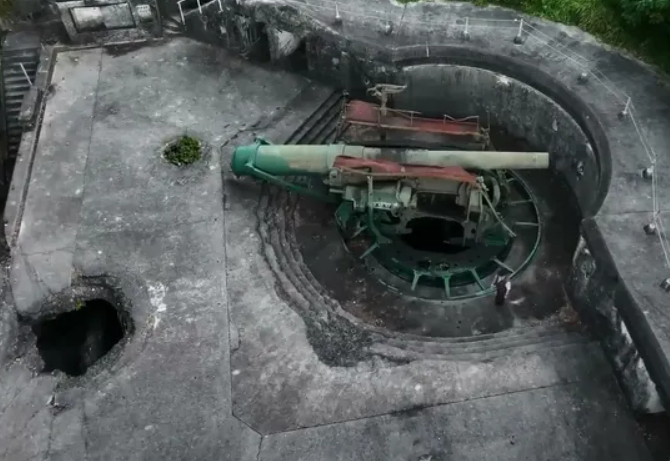
Josh Gates traces the path of these doomed ships, starting from the scorched, artillery-scarred ruins of Corregidor, where General Douglas MacArthur famously pledged, "I shall return." This island, once a bastion of American strength, stands today as a silent testament to the carnage that unfolded when the Japanese juggernaut arrived, turning the Philippines into a crucible of suffering and, eventually, a watery grave for the brave.
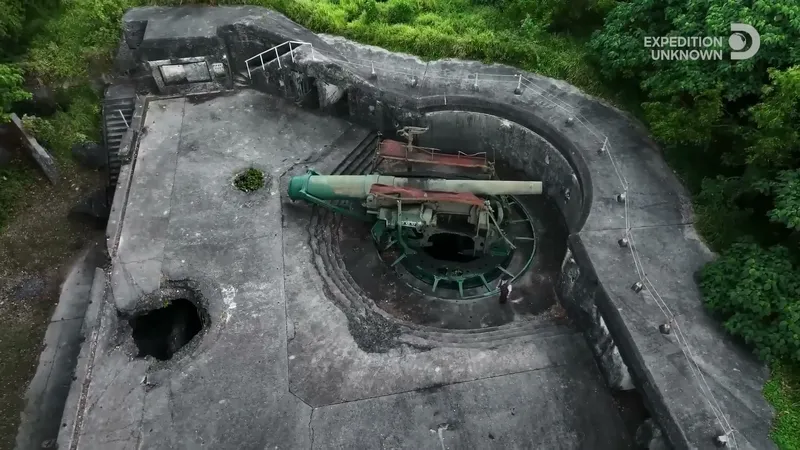
An overhead drone shot capturing a massive, rusted coastal defense cannon mounted in a concrete bunker on Corregidor.
Hunting for the Hōfuku Maru in the Abyss
The mission is as much about technology as it is about tenacity. Josh connects with the Hellships Memorial Foundation, a dedicated group of veterans and historians who have made it their life’s work to give these men a voice. The target? The *Hōfuku Maru*, a cargo ship that met a violent end when a torpedo strike ripped it in two.
Its location has remained a mystery for decades, an elusive ghost in the deep. Josh’s journey takes him to the Philippines, where the geography of the war—narrow sea corridors used by Japanese convoys to evade Allied patrols—becomes a navigational challenge. Traveling by *banca*, the traditional outrigger boats essential to navigating these archipelagos, Josh works alongside local experts to map the seafloor.
The tension on the boat is palpable; the ocean here is vast, unforgiving, and hides its secrets under layers of coral and silt. Every sonar sweep is a heartbeat-skipping moment, a potential breakthrough that could lead the team to the site of one of the largest remaining groups of WWII MIAs. The atmosphere is heavy with the weight of the past, as Josh reminds us that for every rusted plate of steel he finds, there is a soldier whose family has been waiting for nearly a century to know their fate.
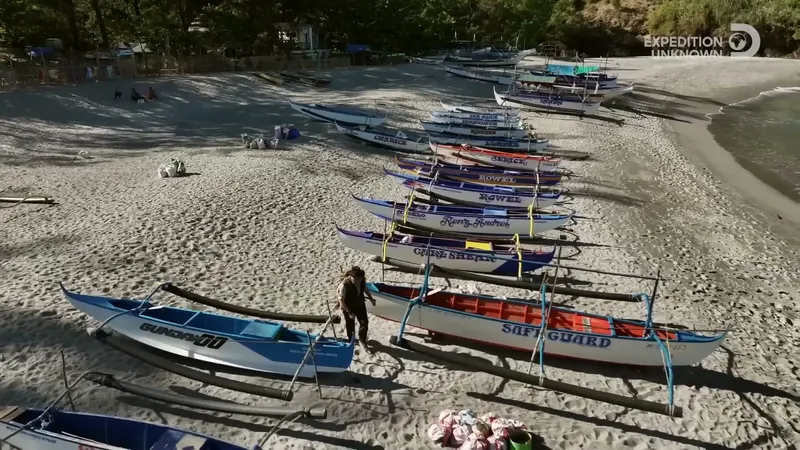
Josh Gates stepping onto a traditional Filipino banca boat at a sun-drenched beach with a line of outrigger canoes.
A Shocking Historical Revelation
The climax of the investigation hinges on a startling discovery within the Japanese archives—long-hidden records that have remained sealed for eighty years. These documents, retrieved through painstaking research, serve as a map to a tragedy that the world nearly forgot. As Josh pores over the records with the lead historian of the foundation, the scope of the horror becomes clear: over 135 Hellships, carrying up to 125,000 prisoners, were scattered across the ocean.
Many of these ships were sunk by Allied aircraft that had no idea their own countrymen were held captive in the cargo holds below—a devastating piece of military intelligence that turned the liberation effort into an unintended massacre. When the *Hōfuku Maru* finally yields its secrets, the impact is profound. This isn’t just about finding a wreck; it’s about acknowledging the humanity that was stripped away in those dark, metal hulls.
As Josh stands on the cliffs overlooking the sea, contemplating the thousands who still remain in the depths, he delivers a somber, moving tribute. The mission to bring our heroes home is more than a treasure hunt; it’s a solemn duty to history, ensuring that the legacy of those who suffered in the Hellships is etched into memory, ensuring that no man is truly left behind.
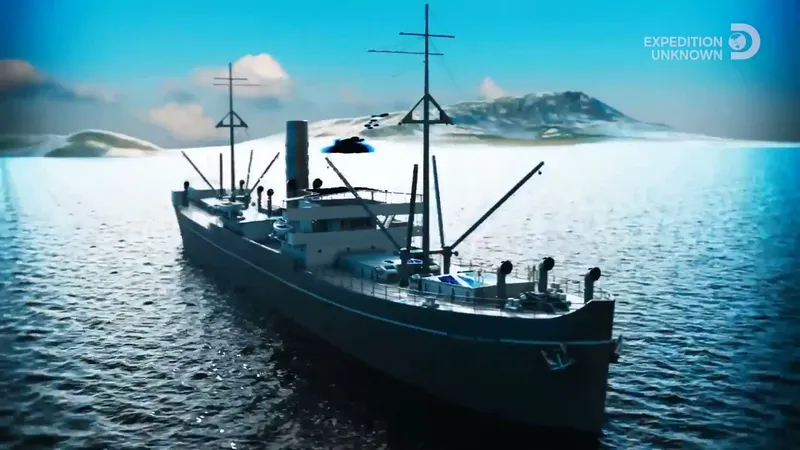
A high-tech 3D animation visualizing the 385-foot structure of the Hōfuku Maru cargo ship submerged under the ocean.
THEO DÕI CHÚNG TÔI TRÊN FACEBOOK